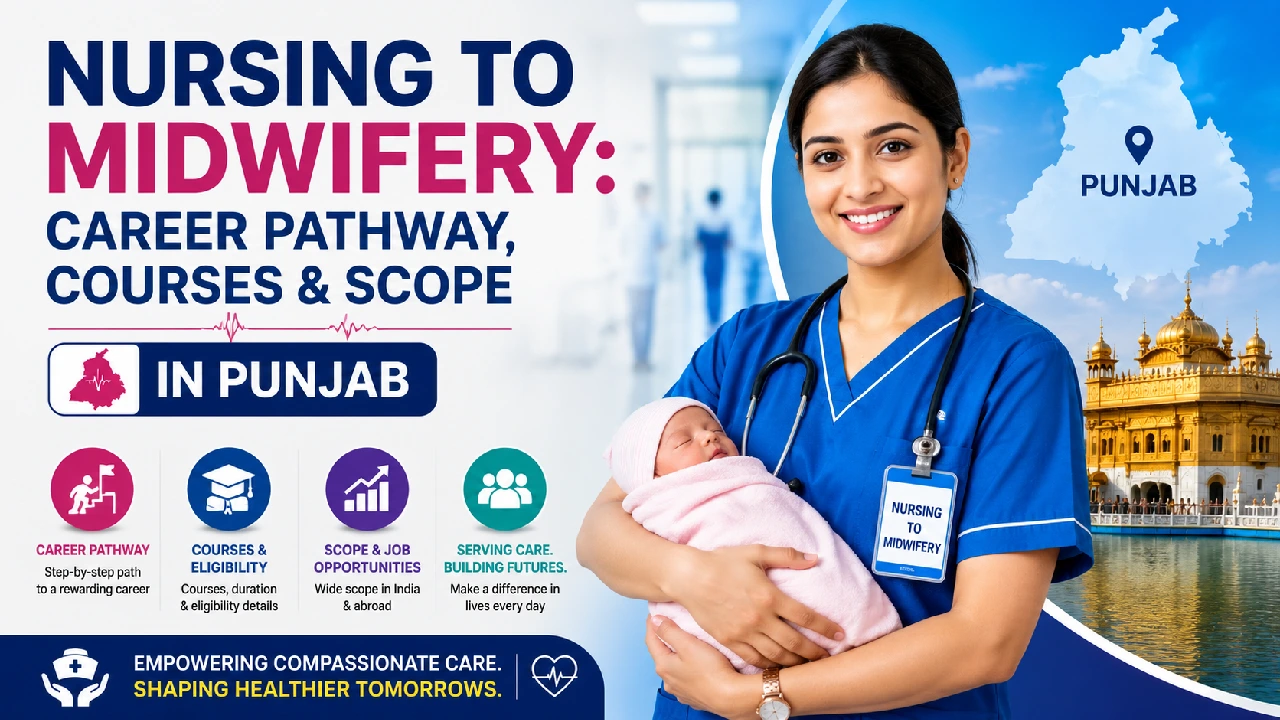
If you’re already studying nursing, or thinking about starting, and you’re drawn to maternal and newborn care, moving from nursing to midwifery is one of the most rewarding specialisations you can pursue in India today. Midwifery is no longer a side skill picked up during General Nursing training — it’s now a recognised, structured career path with its own certification, dedicated training institutes, and growing demand across government and private healthcare.
This guide explains exactly how nursing connects to midwifery in the Indian education system, what courses and bridges are available, and how students in Gurdaspur, Batala, Pathankot, and Amritsar can plan this path starting right after 12th.
What Does “Nursing to Midwifery” Actually Mean?
In India, midwifery isn’t a completely separate degree you start from zero — it builds on a nursing foundation. Every core nursing diploma or degree (ANM, GNM, B.Sc Nursing) already includes midwifery training as a subject, covering antenatal care, normal delivery assistance, postnatal care, and newborn care.
“Moving from nursing to midwifery” typically means one of two things:
- Specialising further after your nursing qualification through the Nurse Practitioner in Midwifery (NPM) programme, to become a certified, autonomous midwife.
- Choosing roles within nursing — such as labour room staff nurse or community health nurse — that focus heavily on midwifery and maternal care.
The Nursing-to-Midwifery Pathway
Here is how the journey typically progresses, depending on where you start:
| Starting Point |
Duration |
Next Step Toward Midwifery |
Typical Role Gained |
| ANM (Auxiliary Nurse Midwifery) |
2 years |
Practise as ANM, then bridge to GNM |
Village/PHC-level midwifery care |
| GNM (General Nursing & Midwifery) |
3 years + 6 mo. internship |
Apply for Nurse Practitioner in Midwifery (NPM) programme |
Labour room / delivery-focused staff nurse |
| B.Sc Nursing |
4 years |
Apply for NPM (with required clinical maternity experience) |
Nurse Practitioner in Midwifery / Midwifery Educator |
Most students from Punjab begin with either ANM or GNM right after 12th, gain hands-on midwifery exposure during training and internship, and then decide whether to progress into the specialised NPM certification later in their career.
What Is the Nurse Practitioner in Midwifery (NPM) Programme?
The Nurse Practitioner in Midwifery (NPM) programme is a structured national initiative under the Ministry of Health and Family Welfare and the Indian Nursing Council, designed to create a dedicated cadre of professional midwives. Eligible nurses — typically GNM or B.Sc Nursing graduates with relevant clinical maternity experience — undergo focused theory and clinical training at designated Midwifery Training Institutes, followed by supervised practice at
Midwifery-Led Care Units (MLCUs).
Graduates of the NPM programme are trained to independently manage normal pregnancies, labour, and childbirth, following international competency standards, while working alongside obstetric teams for any complications.
Step-by-Step: How to Move from Nursing to Midwifery
- Step 1: Complete your 12th (Science stream preferred for GNM/B.Sc; any stream for ANM).
- Step 2: Enrol in ANM, GNM, or B.Sc Nursing at a recognised, INC-approved institute.
- Step 3: Focus on midwifery and obstetric nursing subjects and clinical postings during your course — ask for extra labour-room and antenatal clinic exposure.
- Step 4: Register with the State Nursing Council after graduation and gain hands-on clinical maternity experience.
- Step 5: Apply for the Nurse Practitioner in Midwifery (NPM) certification once you meet the clinical experience criteria, if you want to specialise fully.
- Step 6: Alternatively, apply for labour room, community health, or maternal-child health nursing roles directly with your ANM/GNM/B.Sc qualification.
Skills You Build on the Nursing-to-Midwifery Path
- Antenatal assessment and monitoring
- Conducting and assisting normal deliveries
- Newborn resuscitation and immediate newborn care
- Postnatal and lactation support
- Family planning counselling and reproductive health education
- Recognising early signs of pregnancy or labour complications for timely referral
Career Scope & Salary: Nursing to Midwifery Roles in Punjab
| Role |
Setting |
Experience |
Monthly Salary |
| ANM (Midwifery duties) |
PHC / Sub-centre |
Fresher |
Rs. 12,000 – 20,000 |
| GNM Staff Nurse (Labour Room) |
Government Hospital |
Fresher |
Rs. 22,000 – 32,000 |
| Nurse Practitioner in Midwifery (NPM) |
Midwifery-Led Care Unit |
Post-certification |
Rs. 35,000 – 50,000 |
| Midwifery Educator |
Nursing / Midwifery Institute |
3+ years |
Rs. 40,000 – 60,000 |
Beyond hospital roles, nurses with strong midwifery skills are in demand at Primary Health Centres, District Hospitals, NGOs working in maternal health, and increasingly at private maternity and multi-specialty hospitals across Punjab. Government recruitment drives under the Punjab Health Department regularly include midwifery-focused staff nurse posts.
Why Start Your Nursing-to-Midwifery Journey at SGI Gurdaspur
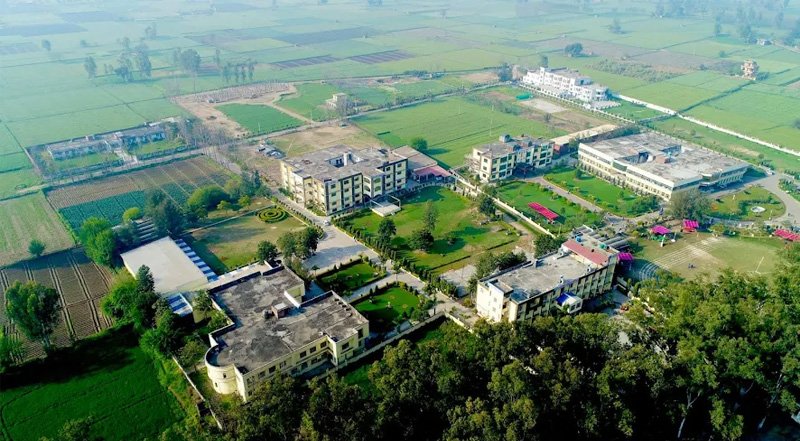
Sukhjinder Group of Institutes (SGI), Gurdaspur offers both ANM (Auxiliary Nurse Midwifery) and GNM (General Nursing & Midwifery) programmes — the two most common starting points for a midwifery-focused nursing career. Here’s what makes SGI a strong foundation:
- INC and State Nursing Council approved ANM and GNM programmes
- Dedicated midwifery and obstetric nursing labs for hands-on practice
- Hospital training tie-ups offering real labour room and antenatal clinic exposure
- Experienced faculty with clinical maternity and midwifery backgrounds
- Placement support to help graduates move into hospital, community, or specialised midwifery roles
- Convenient campus location, 5 minutes from Gurdaspur Bus Stand, serving students from Batala, Pathankot, and Amritsar
Frequently Asked Questions — Nursing to Midwifery
Q1. Can I become a midwife directly, without doing nursing first?
In India, midwifery is built on a nursing foundation. You typically start with ANM, GNM, or B.Sc Nursing, and can later specialise through the Nurse Practitioner in Midwifery (NPM) certification if you want to work purely as a midwife.
Q2. Which is the better starting point: ANM or GNM?
ANM is a 2-year programme, ideal if you want to enter the workforce quickly and work in community or rural midwifery roles. GNM is a longer, more comprehensive 3-year diploma with wider hospital career options, including labour room and maternity ward roles.
Q3. Is midwifery a good career choice in Punjab in 2026?
Yes. With growing government focus on maternal health through Midwifery-Led Care Units and ongoing recruitment in Punjab’s health department, nurses with strong midwifery skills have good job security and clear specialisation opportunities.
Q4. Does SGI Gurdaspur offer the NPM certification?
SGI Gurdaspur offers the foundational ANM and GNM programmes that prepare you for a midwifery-focused nursing career. Contact our admissions office at sgigurdaspur.org/contact-us/ for current details on further specialisation pathways.
Q5. What subjects should I focus on if I want to move toward midwifery?
Prioritise midwifery, obstetric and gynaecological nursing, community health nursing, and child health nursing — and seek maximum clinical exposure in labour rooms and antenatal clinics during your internship.
Conclusion
Moving from nursing to midwifery is a natural, well-supported career progression in India — not a separate path you have to start from scratch. Whether you choose ANM for a quicker entry into community healthcare or GNM for a broader hospital-based career with the option to specialise later through the NPM certification, the foundation you build matters most.
At SGI Gurdaspur, we prepare ANM and GNM students with strong, hands-on midwifery training so they’re ready for whichever path they choose — from labour room nursing to advanced midwifery practice.
Ready to begin your nursing-to-midwifery journey? Apply for ANM or GNM at SGI Gurdaspur — Admissions Open 2026.