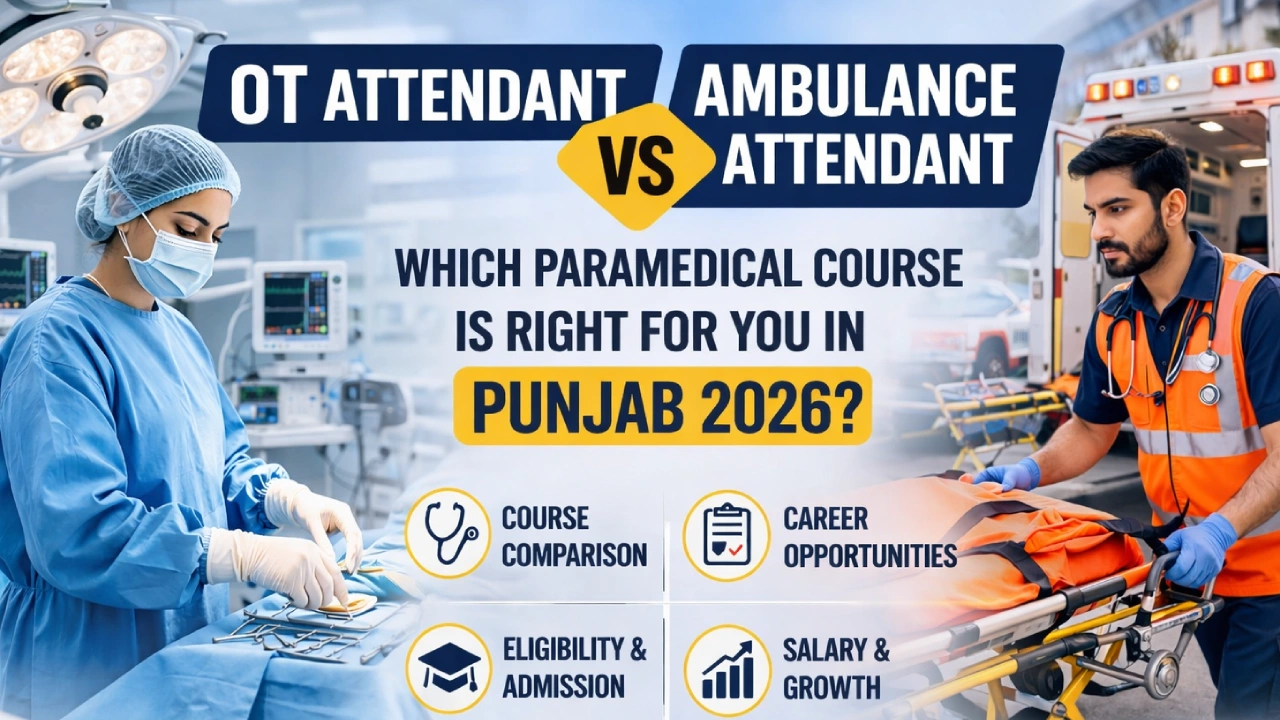
If you are looking for a short paramedical course after 10th or 12th in Punjab that leads directly to a hospital or emergency services job, two of the most in-demand options are the OT Attendant and the Ambulance Attendant courses.
Both are certificate-level programmes. Both are open to Class 10 pass candidates. Both lead to stable, well-paying jobs in Punjab's growing healthcare sector. But they prepare you for completely different roles — one inside the operation theatre, one on the road saving lives in emergencies.
In this complete guide, we compare OT Attendant vs Ambulance Attendant — course details, eligibility, career scope, salary, government jobs, and how to choose the right one for your goals. We also cover how to apply at SGI Gurdaspur for the 2026 session.
What Is an OT Attendant Course?
An OT Attendant (Operation Theatre Attendant) is a trained paramedical professional who works inside surgical operation theatres, supporting the surgical team before, during, and after procedures. The OT Attendant course is a certificate programme — typically 6 months to 1 year — that trains students in the specific skills required to function in a sterile surgical environment.
What does an OT Attendant do?
- Prepare and maintain the sterile environment of the operation theatre
- Arrange and pass surgical instruments to the surgical team
- Assist in positioning patients on the OT table before surgery
- Ensure all OT equipment is clean, functional, and properly sterilised
- Transport patients to and from the OT safely
- Maintain OT records, instrument counts, and surgical waste disposal
- Support anaesthesia and post-operative recovery teams
Key facts about the OT Attendant course
- Duration: 6 months to 1 year
- Eligibility: 10th pass (Matriculation) from a recognised board
- Work setting: Operation theatres in government hospitals, private surgical centres, and multi-specialty hospitals
- Skills covered: Sterilisation techniques, instrument handling, OT protocols, patient positioning, and surgical support
What Is an Ambulance Attendant Course?
An Ambulance Attendant (also called an Emergency Medical Technician or EMT at the basic level) is a trained paramedical professional who responds to medical emergencies, provides pre-hospital care, and safely transports patients to hospital. The course is typically 6 months to 1 year and covers emergency first response, basic life support, and ambulance operations.
What does an Ambulance Attendant do?
- Respond to emergency calls and reach the scene quickly and safely
- Assess the patient's condition and provide immediate first aid
- Perform CPR (Cardiopulmonary Resuscitation) and basic life support
- Control bleeding, manage fractures, and stabilise spinal injuries
- Operate oxygen equipment, AED (Automated External Defibrillator), and stretchers
- Communicate with hospitals during transport and hand over patients to emergency teams
- Maintain ambulance equipment, supplies, and cleanliness
Key facts about the Ambulance Attendant course
- Duration: 6 months to 1 year
- Eligibility: 10th pass (Matriculation) from a recognised board
- Work setting: 108 ambulance service, private ambulance operators, hospitals, disaster relief teams
- Skills covered: First aid, CPR, BLS, patient transport, triage, emergency communication
OT Attendant vs Ambulance Attendant — Complete Comparison
| Feature | OT Attendant | Ambulance Attendant |
|---|---|---|
| Full Role | Operation Theatre Attendant | Emergency cum Ambulance Attendant |
| Duration | 6 months – 1 year | 6 months – 1 year |
| Eligibility | 10th pass | 10th pass |
| Work Environment | Operation theatres, hospitals | Ambulances, emergency scenes |
| Key Skills | Sterilisation, instrument handling, OT protocols | First aid, CPR, BLS, patient transport |
| Physical Demands | Moderate — standing for long periods | High — physically active fieldwork |
| Work Timing | Shift-based (hospital OT schedule) | Shift-based (24/7 emergency response) |
| Govt Job Scope | Govt hospitals, AIIMS, PGIMER | 108 service, disaster management |
| Starting Salary | Rs. 18,000 – 28,000/month | Rs. 15,000 – 25,000/month |
| Growth Path | OT Technician, B.Sc OT Technology | Advanced EMT, paramedic diploma |
| Best Suited For | Students who prefer indoor, structured hospital work | Students who prefer active, on-field emergency response |
Who Should Choose the OT Attendant Course?
The OT Attendant course is the right choice for you if:
- You want to work inside a hospital in a structured, indoor environment
- You are detail-oriented and comfortable with strict hygiene and sterility protocols
- You want to be closely involved in the surgical process — one of the most critical areas of any hospital
- You prefer shift-based hospital work with predictable hours compared to field-based emergency response
- Your goal is to work at multi-specialty hospitals, AIIMS, PGIMER, or district government hospitals in Punjab
- You want a career path that can grow into an OT Technician or B.Sc OT Technology role with further study
Who Should Choose the Ambulance Attendant Course?
The Ambulance Attendant course is the right choice for you if:
- You want an active, field-based career — responding to emergencies rather than working in a fixed location
- You are physically fit, calm under pressure, and comfortable in unpredictable situations
- You want to be on the front line of emergency healthcare — the first person to help patients in crisis
- You want to work with the 108 Ambulance Emergency Service in Punjab or with private ambulance operators
- Your goal is to eventually train as an Advanced EMT or paramedic and build a career in emergency medical services
- You want to contribute to disaster relief, road accident response, and community emergency preparedness
Government Job Opportunities — OT Attendant and Ambulance Attendant in Punjab
Government jobs for OT Attendants
- Punjab Health Department — OT attendant posts at district and sub-district hospitals
- AIIMS Bathinda, New Delhi, Rishikesh — Multi-skilled OT support staff recruitment
- PGIMER Chandigarh — OT attendant and theatre support staff posts
- ESIC Hospitals — OT support staff at Employees State Insurance hospitals
- Railway Hospitals — Surgical support staff for railway medical services
- Army Base Hospitals — Civilian OT attendant posts at army medical facilities
Government jobs for Ambulance Attendants
- 108 Emergency Ambulance Service Punjab — the largest recruiter of trained ambulance attendants in the state
- Punjab Health Department — Mobile health unit and district ambulance staff
- National Disaster Response Force (NDRF) — Emergency medical support staff
- Indian Red Cross Society — First aid and ambulance response teams
- Defence Services — Ambulance and field medical support in army, navy, and air force
- Municipal Corporation — City emergency medical service ambulance staff
In Punjab, the 108 ambulance service alone employs thousands of trained emergency attendants across all 23 districts. Recruitment drives happen regularly, and candidates with a recognised ambulance attendant certificate from an affiliated institute have a strong advantage.
Salary Comparison — OT Attendant vs Ambulance Attendant in Punjab 2026
| Role | Employer Type | Experience | Monthly Salary |
|---|---|---|---|
| OT Attendant | Government Hospital | Fresher | Rs. 18,000 – 25,000 |
| OT Attendant | Private Multi-Specialty | Fresher | Rs. 20,000 – 28,000 |
| OT Attendant | AIIMS / PGIMER | 1–3 years | Rs. 25,000 – 35,000 |
| Ambulance Attendant | 108 Emergency Service | Fresher | Rs. 15,000 – 22,000 |
| Ambulance Attendant | Private Ambulance / Hospital | Fresher | Rs. 18,000 – 25,000 |
| Senior EMT / Advanced Attendant | Private / Govt | 3–5 years | Rs. 25,000 – 40,000 |
OT Attendants typically start at slightly higher salaries due to the specialised, sterile-environment nature of their work. However, Ambulance Attendants who gain experience and upgrade to Advanced EMT or paramedic-level qualifications can earn significantly more over time — especially in private emergency medical services.
Career Growth — What Can You Do After These Courses?
Career growth path for OT Attendants
- OT Technician — with additional certification or a diploma in OT Technology
- B.Sc OT Technology — a 3-year degree that makes you eligible for senior OT roles
- Anaesthesia Assistant — specialised training in supporting anaesthesiologists
- Hospital Administrator — with management qualifications added later
Career growth path for Ambulance Attendants
- Advanced EMT — with additional emergency medical training
- Paramedic Diploma — a recognised upgrade qualification in emergency medicine
- Emergency Medical Dispatcher — coordinating ambulance responses from control centres
- Disaster Management Specialist — with government or NGO disaster response teams
OT Attendant and Ambulance Attendant Courses at SGI Gurdaspur — Admission 2026
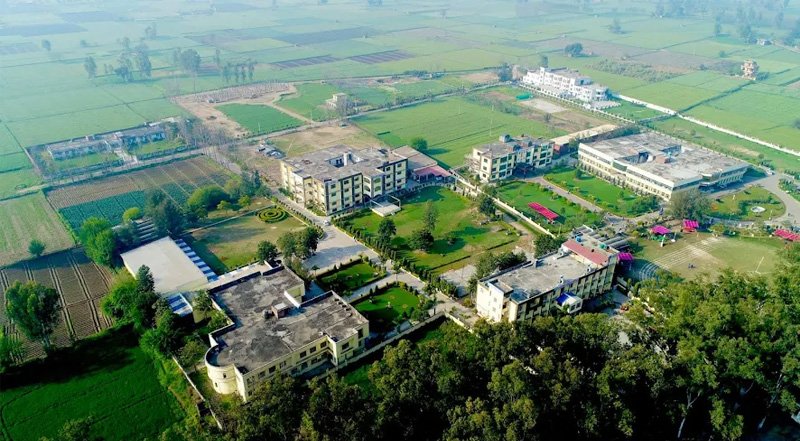
SGI Gurdaspur offers both the OT Attendant and Emergency cum Ambulance Attendant courses through its Para Medical department. Both programmes are available for the 2026–27 session.
Why students from Gurdaspur, Batala, and Pathankot choose SGI for paramedical training
- Both OT Attendant and Ambulance Attendant programmes offered under one campus
- Dedicated OT simulation lab and first aid / BLS training facility
- Hospital tie-ups for hands-on clinical placement during the course
- Experienced faculty from hospital OT and emergency services backgrounds
- Strong placement network — private hospitals, 108 ambulance service, and nursing homes in Gurdaspur district
- Separate hostel with 24/7 security for outstation students
- One of the most affordable paramedical training institutes in the Gurdaspur-Pathankot-Batala corridor
- Campus just 5 minutes from Gurdaspur Bus Stand
How to apply — 2026
- Confirm eligibility — 10th pass from a recognised board
- Visit sgigurdaspur.org/para-medical/ or call our admissions helpline
- Choose your programme — OT Attendant or Ambulance Attendant
- Submit application form online or in person at SGI campus
- Complete document verification and fee payment
- Begin your paramedical training at SGI Gurdaspur
Required documents: 10th marksheet and certificate, character certificate, medical fitness certificate, category certificate (if applicable), passport-size photographs, and Aadhaar card.
Frequently Asked Questions — OT Attendant vs Ambulance Attendant in Punjab
Q1. Which course is better — OT Attendant or Ambulance Attendant?
Neither is objectively better — it depends entirely on your personality and career goal. If you prefer structured indoor hospital work and want to be part of the surgical team, choose OT Attendant. If you are physically active, thrive under pressure, and want a field-based emergency career, choose Ambulance Attendant. Both lead to good salaries and stable jobs in Punjab's healthcare sector.
Q2. What is the qualification needed for OT Attendant course in Punjab?
The minimum qualification for the OT Attendant course at SGI Gurdaspur is 10th pass (matriculation) from a recognised state or central board. No science background at 12th is required. Students from any stream are eligible to apply.
Q3. Does the 108 ambulance service in Punjab hire trained ambulance attendants?
Yes. The 108 Emergency Ambulance Service is the largest employer of trained ambulance attendants in Punjab. The service operates across all 23 districts of Punjab and regularly recruits candidates with a recognised ambulance attendant or EMT certificate. Completing the course at an affiliated institute like SGI Gurdaspur strengthens your candidacy for these posts.
Q4. Can OT Attendants work in private hospitals in Punjab?
Yes. Private multi-specialty hospitals, surgical centres, and nursing homes in cities like Amritsar, Ludhiana, Jalandhar, and Chandigarh actively hire trained OT attendants. Private hospital salaries are often higher than government starting pay, especially in larger corporate hospital chains. SGI Gurdaspur's placement network includes several private hospitals in the region.
Q5. Can I do both the OT Attendant and Ambulance Attendant courses?
Yes, though typically one after the other rather than simultaneously. Completing one course first, gaining work experience, and then upgrading with additional training is the recommended path. Speak to our admissions counsellors at SGI Gurdaspur for the best course sequence based on your career goals.
Q6. What is the fee for OT Attendant and Ambulance Attendant courses at SGI Gurdaspur?
Course fees are affordable and among the most competitive in the Gurdaspur-Batala-Pathankot region. Education loan assistance and merit scholarships are available. Contact our admissions team for the exact 2026–27 fee details for each programme.
Conclusion — OT or Ambulance: Both Lead to a Meaningful Healthcare Career
Whether you choose to work in the precision environment of an operation theatre or on the front lines of emergency medical response, both the OT Attendant and Ambulance Attendant courses at SGI Gurdaspur give you the skills, certification, and placement support to build a real, stable career in Punjab's healthcare sector.
Both courses are open to Class 10 pass students. Both are short — 6 months to 1 year. And both lead directly to employment, with clear pathways for career growth into higher paramedical and emergency medicine qualifications.
Ready to choose your paramedical career path? Apply for OT Attendant or Ambulance Attendant courses at SGI Gurdaspur — Admissions Open 2026.
Visit: sgigurdaspur.org/para-medical/ or call our admissions helpline today.