In this complete 2026 guide, we cover everything about B.Sc Radiology & Imaging Technology in Punjab — what the course involves, eligibility, subjects, career scope, government jobs, salary, and how to apply at SGI Gurdaspur for the 2026–27 session.
What Is B.Sc Radiology & Imaging Technology?
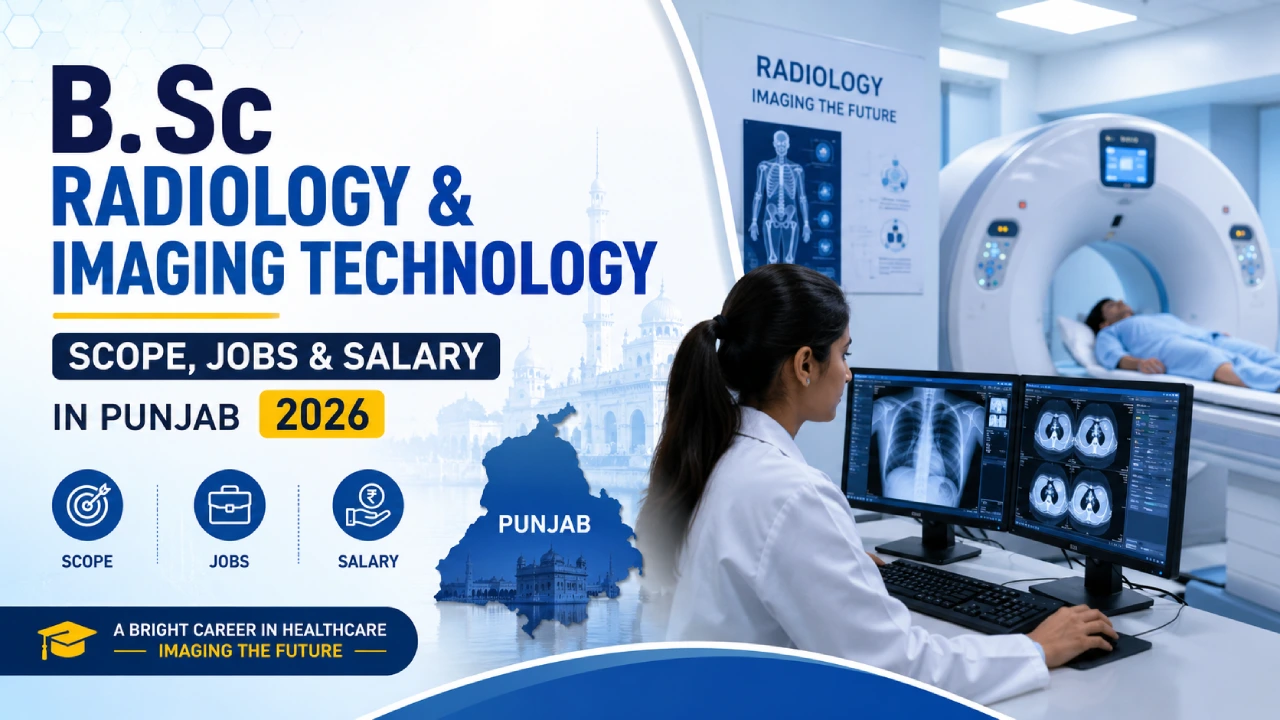
B.Sc Radiology & Imaging Technology (also called B.Sc Medical Imaging Technology or B.Sc Radiography) is a 3-year undergraduate degree programme that trains students to operate diagnostic imaging equipment — X-ray machines, CT scanners, MRI machines, ultrasound devices, fluoroscopy systems, and mammography units — in hospital radiology departments and diagnostic centres.
Graduates work as Radiographers, Imaging Technologists, or Radiology Technicians — performing imaging procedures, positioning patients correctly, ensuring image quality, and working alongside radiologists (doctors) who interpret the resulting images for diagnosis and treatment planning.
Key facts — B.Sc Radiology & Imaging Technology
- Duration: 3 years (6 semesters) + 6 months internship
- Level: Undergraduate degree (B.Sc)
- Eligibility: 12th with Physics, Chemistry, and Biology (PCB), minimum 45–50% marks
- Regulated by: Affiliated university + Allied and Healthcare Professions Act guidelines
- Work settings: Government hospitals, private hospitals, diagnostic centres, imaging labs
- Further studies: M.Sc Radiology / Medical Imaging, PG Diploma in CT/MRI/Ultrasound
- Registration: Eligible for Allied Health Professions Council registration after graduation
Why Radiology Is One of Punjab's Fastest-Growing Healthcare Careers
India faces a significant shortage of trained radiographers and imaging technologists — with the diagnostic imaging sector growing at over 22% annually while the supply of trained professionals falls well short of demand. In Punjab specifically, the rapid expansion of private multi-specialty hospitals, diagnostic chains (SRL, Dr Lal PathLabs, Metropolis), and government health infrastructure under Ayushman Bharat has dramatically increased the need for qualified B.Sc Radiology graduates.
Students who complete B.Sc Radiology & Imaging Technology from a recognised college in Punjab today are entering one of the most undersupplied and consistently employed allied healthcare fields in the country.
Imaging Modalities You Will Work With
One of the most exciting aspects of a radiology career is the variety of advanced technology you operate daily. B.Sc Radiology & Imaging Technology trains you across all major diagnostic imaging systems:
B.Sc Radiology — Course Structure and Subjects
| Year / Semester | Key Subjects Covered |
|---|---|
| Year 1 Sem 1 & 2 |
Anatomy and Physiology, Biochemistry, Physics of Radiology, Radiographic Equipment, Radiation Physics, Darkroom Technology, Patient Care in Radiology |
| Year 2 Sem 3 & 4 |
Radiographic Positioning and Techniques, Contrast Media, Fluoroscopy, CT Scanning Principles, Radiation Protection and Safety, Pharmacology for Radiographers, Image Processing and Quality Control |
| Year 3 Sem 5 & 6 |
MRI Principles and Practice, Ultrasound and Sonography, Nuclear Medicine Basics, Mammography, Interventional Radiology, Hospital Management, Research Methodology, Clinical Project |
| Internship 6 months |
Supervised clinical rotations in X-ray, CT, MRI, ultrasound, and fluoroscopy departments of affiliated hospitals — mandatory for degree completion |
The programme includes extensive clinical training hours in hospital radiology departments — giving students hands-on experience operating diagnostic equipment under the supervision of qualified radiographers and radiologists before they graduate. This clinical exposure is what sets B.Sc Radiology graduates apart from certificate-level technicians in the job market.
Career Scope — Radiology Jobs in Punjab 2026
Trained radiology and imaging technology graduates are hired across a uniquely wide range of healthcare settings — from government district hospitals and AIIMS to private chains, cancer centres, and mobile diagnostic units serving rural Punjab.
Healthcare settings hiring B.Sc Radiology graduates
Government Jobs After B.Sc Radiology in Punjab
Government hospital radiology departments are among the most stable employers of B.Sc Radiology graduates — with regular recruitment across Punjab and central government health institutions:
- Punjab Health Department — Radiographer and X-ray Technician posts at district hospitals, civil hospitals, and community health centres across Punjab
- AIIMS Bathinda / New Delhi / Rishikesh — Radiology Technologist and Junior Radiographer recruitment on a regular basis
- PGIMER Chandigarh — Radiographer and imaging technologist posts in one of North India's largest radiology departments
- Indian Railways — X-ray Technician and radiography staff posts in railway hospitals across the Northern Railway zone
- ESIC Hospitals — Radiographer posts in Employees State Insurance hospitals serving industrial workers in Punjab
- Indian Armed Forces — Army Medical Corps radiographer posts in military hospitals (for eligible candidates)
- Central Government Health Scheme (CGHS) — Radiology staff at CGHS dispensaries and empanelled hospitals
- National Health Mission (NHM) Punjab — Mobile health unit radiographer posts for rural health outreach
AIIMS and PGIMER Radiology Recruitment — What to Know
AIIMS institutions and PGIMER Chandigarh are among the most prestigious government employers for radiology graduates in North India. Both recruit Radiographers and Junior Radiology Technologists at Pay Level 5–6 (Rs. 29,200–47,600 basic pay) plus DA, HRA, and medical allowances — with total in-hand salary often exceeding Rs. 45,000–60,000 per month. These posts also offer career progression to Senior Radiographer and Radiology Supervisor grades with experience. B.Sc Radiology from a recognised institute is the minimum qualification for these posts.
Salary After B.Sc Radiology & Imaging Technology in Punjab — 2026
| Job Role | Employer | Experience | Monthly Salary |
|---|---|---|---|
| Radiographer / X-Ray Tech | Govt District Hospital (Punjab) | Fresher | Rs. 22,000 – 35,000 |
| Radiographer | AIIMS / PGIMER | Fresher | Rs. 38,000 – 58,000 |
| Radiographer | Private Multi-Specialty Hospital | Fresher | Rs. 20,000 – 32,000 |
| CT Scan Technologist | Diagnostic Chain / Private Hospital | 1–2 years | Rs. 25,000 – 40,000 |
| MRI Technologist | Multi-Specialty / Neuro Hospital | 2–3 years | Rs. 30,000 – 50,000 |
| Sonographer | Diagnostic Centre / OB-GYN | 1–3 years | Rs. 28,000 – 45,000 |
| Application Specialist | Siemens / Philips / GE Healthcare | 3–5 years | Rs. 40,000 – 70,000 |
| Radiology Supervisor | Large Private Hospital | 5+ years | Rs. 45,000 – 75,000 |
Radiology salaries in India are rising consistently — driven by the shortage of trained professionals and the rapid expansion of diagnostic imaging infrastructure. MRI and CT specialisation commands particularly strong premiums — technologists with 2–3 years of MRI or CT experience are among the highest-paid allied health professionals in Punjab's private hospital sector.
Further Studies After B.Sc Radiology & Imaging Technology
B.Sc Radiology is not a terminal qualification — it opens clear pathways for specialisation and advancement:
- M.Sc Medical Imaging Technology — 2-year postgraduate degree for senior hospital roles and academic careers
- PG Diploma in CT Scan Technology — specialise in computed tomography operations and protocols
- PG Diploma in MRI Technology — advanced MRI scanner operation, protocols, and cardiac/neuro imaging
- PG Diploma in Ultrasound / Sonography — qualify as a registered sonographer for OB-GYN, abdominal, and cardiac imaging
- PG Diploma in Radiation Therapy — move into cancer treatment using radiation oncology equipment
- MBA in Hospital Administration — transition into radiology department management or diagnostic centre ownership
Each specialisation qualification significantly increases earning potential — MRI-certified or sonography-certified radiographers in Punjab command salaries 40–60% higher than general radiographers at equivalent experience levels.
B.Sc Radiology vs Other Allied Health Science Courses — Quick Comparison
| Feature | B.Sc Radiology | B.Sc Medical Lab Science | B.Sc Medical Technology |
|---|---|---|---|
| Work Setting | Radiology / Imaging dept | Pathology / Blood lab | Multiple clinical depts |
| Equipment Used | X-ray, MRI, CT, USG | Microscopes, analysers | Varies by specialisation |
| Patient Contact | High — direct patient imaging | Low — sample-based | Moderate |
| Govt Job Scope | Strong | Strong | Moderate |
| Specialisation Options | MRI, CT, USG, Mammography | Microbiology, Biochemistry | Multiple branches |
| Starting Salary | Rs. 20,000 – 35,000 | Rs. 18,000 – 28,000 | Rs. 18,000 – 28,000 |
Also explore: B.Sc Medical Lab Science and B.Sc Medical Technology at SGI Gurdaspur for related allied health science career options.
B.Sc Radiology & Imaging Technology at SGI Gurdaspur — Admission 2026
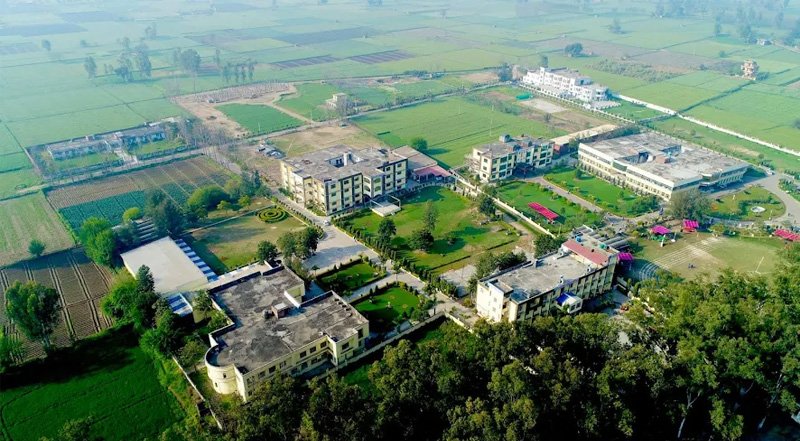
SGI Gurdaspur offers B.Sc Radiology & Imaging Technology through its Institute of Science and Technology, affiliated to the relevant university in Punjab. The programme includes extensive clinical training through hospital tie-ups in Gurdaspur and nearby districts.
Why students from Gurdaspur, Batala, and Pathankot choose SGI for B.Sc Radiology
- University-affiliated B.Sc Radiology programme
- Radiology and imaging technology lab
- Clinical hospital placements for hands-on training
- Experienced faculty from hospital radiology departments
- Strong placement support — government hospitals, diagnostic chains, private hospitals
- AIIMS / PGIMER govt exam guidance
- Hostel with 24/7 security for boys and girls
- Affordable fees + education loan assistance
- 5 minutes from Gurdaspur Bus Stand
- Easy access from Batala, Pathankot, Amritsar
How to apply for B.Sc Radiology at SGI Gurdaspur — 2026
- Confirm eligibility — 12th with Physics, Chemistry, and Biology (PCB), minimum 45–50% marks
- Visit sgigurdaspur.org/b-sc-in-radiology-imaging-technology/ or call our admissions helpline
- Submit your application form online or visit the SGI campus in person
- Appear for university-level admission counselling if required for the current session
- Complete document verification and fee payment
- Begin your B.Sc Radiology journey at SGI Gurdaspur — 2026–27 session
Required documents: 10th and 12th marksheets and certificates, character certificate, medical fitness certificate, category certificate (SC/OBC/EWS if applicable), passport-size photographs, and Aadhaar card.
Frequently Asked Questions — B.Sc Radiology in Punjab
Q1. Is B.Sc Radiology a good career in Punjab in 2026?
Yes — B.Sc Radiology & Imaging Technology is one of the most in-demand and consistently employed allied healthcare careers in Punjab. The diagnostic imaging sector is growing at over 22% annually, while the supply of trained radiographers falls short of demand across government hospitals, private hospitals, and diagnostic chains. Graduates from recognised colleges find strong job placement immediately after completing the programme.
Q2. What is the difference between a Radiographer and a Radiologist?
A Radiographer (B.Sc Radiology graduate) is an allied health professional trained to operate imaging equipment — X-ray machines, CT scanners, MRI machines, and ultrasound devices — and perform imaging procedures on patients. A Radiologist is a medical doctor (MBBS + MD Radiology) who interprets the images produced by radiographers to make diagnoses. Radiographers and radiologists work closely together in every hospital radiology department.
Q3. Is B.Sc Radiology eligible for AIIMS and PGIMER government jobs?
Yes. AIIMS institutions across India and PGIMER Chandigarh regularly recruit Radiographers and Junior Radiology Technologists through their official recruitment processes. B.Sc Radiology from a recognised university-affiliated institute is the minimum qualification required. These posts offer Pay Level 5–6 salaries plus government allowances — with total compensation often exceeding Rs. 45,000–60,000 per month.
Q4. Can B.Sc Radiology graduates work abroad?
Yes. Radiographers are in strong international demand — particularly in Gulf countries (UAE, Saudi Arabia, Qatar), the UK, Canada, and Australia. The Gulf healthcare sector actively recruits Indian radiographers for both general and specialised imaging roles. For UK and Canada, additional registration exams may be required (e.g., HCPC registration for the UK). With 2–3 years of hospital experience and MRI or CT specialisation, international radiology positions can offer earnings of Rs. 80,000–1,50,000+ per month equivalent.
Q5. What is the scope of MRI and CT specialisation for B.Sc Radiology graduates?
MRI and CT specialisation are the two highest-value career tracks for B.Sc Radiology graduates. MRI technologists are particularly in short supply in Punjab — most large hospitals have MRI machines but struggle to find qualified operators. A PG Diploma in MRI or CT Technology after B.Sc Radiology can increase monthly earnings by 40–60% compared to general radiographer roles, and opens positions in premium private hospitals, cancer centres, and cardiac imaging centres.
Q6. What is the fee for B.Sc Radiology at SGI Gurdaspur?
Fee is competitive and among the most affordable in the Gurdaspur-Batala-Pathankot region for an allied health science degree. Education loan assistance through nationalised banks is available, and merit and category-based scholarships may apply for eligible students. Contact our admissions team for the complete 2026–27 fee structure.
Conclusion — The Machines That Save Lives Need People Who Know How to Run Them
Every year, millions of diagnostic imaging scans are performed across Punjab's hospitals — and every single one requires a trained radiographer to operate the equipment, position the patient, ensure image quality, and deliver results that doctors rely on to make life-changing decisions. That person could be you.
B.Sc Radiology & Imaging Technology from SGI Gurdaspur gives you the clinical training, the imaging skills, the degree, and the placement network to step directly into this essential, high-demand role — in government hospitals, private chains, or internationally — within 3.5 years of completing 12th.
Ready to build a career at the cutting edge of medical imaging?
Apply for B.Sc Radiology & Imaging Technology at SGI Gurdaspur — Admissions Open 2026.
Visit: sgigurdaspur.org/b-sc-in-radiology-imaging-technology/
Or call our admissions helpline to speak with a counsellor today.