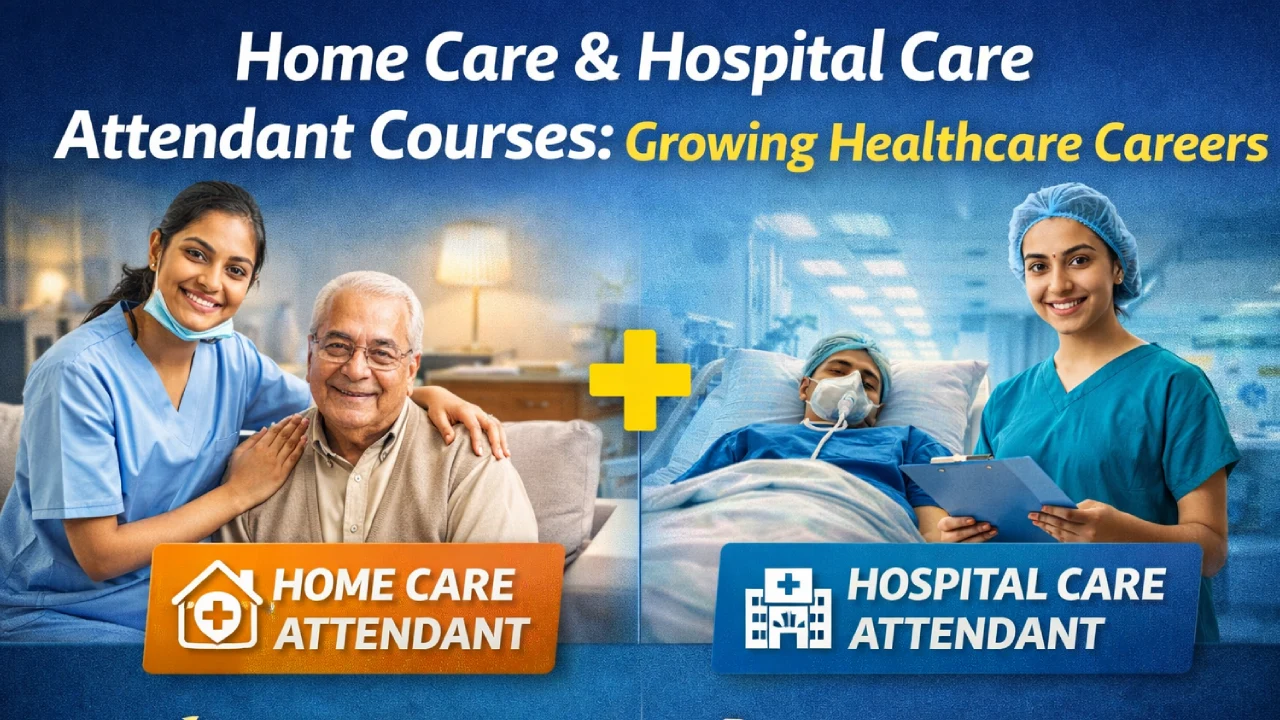
India's healthcare sector is witnessing a massive transformation. From world-class hospitals in metro cities to expanding rural health infrastructure, the demand for trained, compassionate, and skilled healthcare support workers has never been greater. At the heart of this transformation are two vital roles: the Home Care Assistant and the Hospital Care Attendant.
If you are looking for a meaningful career that combines human compassion with practical healthcare skills — one that offers job security, growth, and real-world impact — then a course in Home Care or Hospital Care Attendant training may be exactly the right choice for you.
In this article, we explore what these courses cover, why they matter, the career opportunities they unlock, and how they fit into India's rapidly growing paramedical ecosystem.
Table of Contents
- The Rising Demand for Healthcare Support Workers
- What Is a Home Care Assistant?
- What Is a Hospital Care Attendant?
- What Do These Courses Cover?
- Eligibility and Course Duration
- Career Opportunities After the Course
- Why This Career Is More Than Just a Job
- Home Care vs Hospital Care: Which Path Is Right for You?
- The Paramedical Ecosystem
- Tips for Choosing the Right Course and Institute
The Rising Demand for Healthcare Support Workers
India is home to over 1.4 billion people, and with an ageing population, a rising burden of chronic diseases, and increasing health awareness, the need for healthcare support staff is growing exponentially. According to the National Health Policy and various industry estimates, India needs millions of trained healthcare workers at all levels — and paramedical roles like home care attendants and hospital care attendants are among the fastest-growing segments.
- India's healthcare industry is projected to reach USD 372 billion by 2030.
- The country faces a shortfall of over 6 million healthcare workers — a figure highlighted by global health authorities.
- Home care services alone are growing at 20%+ CAGR, driven by elder care and post-surgical recovery demand.
- Trained care attendants are in demand not just in India, but in Gulf countries, UK, Canada, and Europe.
This shortage represents a golden opportunity. For students and job seekers with the right training, the doors to a stable, respected, and well-paying career are wide open.
What Is a Home Care Assistant?
A Home Care Assistant (also called a Home Health Aide or Home Care Worker) provides personal care, basic medical assistance, and emotional support to patients in their homes. These patients may include:
- Elderly individuals who can no longer manage daily activities independently
- Patients recovering from surgery, injury, or illness
- People with physical or mental disabilities
- Individuals with chronic conditions such as diabetes, heart disease, or paralysis
- Children or adults requiring special care
The home care assistant works under the supervision of nurses, doctors, or the patient's family to ensure the patient receives quality care in the comfort of their own home — which is often preferred over long hospital stays.
Key Responsibilities of a Home Care Assistant
- Assisting patients with bathing, grooming, dressing, and toileting
- Monitoring vital signs: temperature, pulse, respiration, blood pressure
- Administering prescribed medications under supervision
- Preparing meals according to dietary requirements
- Assisting with mobility exercises and physiotherapy routines
- Providing companionship and emotional support
- Maintaining hygiene and cleanliness of the patient environment
- Documenting patient condition and reporting changes to medical staff or family
What Is a Hospital Care Attendant?
A Hospital Care Attendant works within a hospital, clinic, nursing home, or other inpatient healthcare facility. Unlike nurses or doctors, care attendants focus on providing hands-on physical support and basic care to patients admitted for treatment.
Hospital care attendants often work in departments such as General Wards, ICUs, Surgical Wards, Maternity Wards, Paediatric Units, Orthopaedic Departments, and Geriatric Care Centres.
Key Responsibilities of a Hospital Care Attendant
- Helping patients with personal hygiene and comfort
- Changing bed linens and maintaining patient surroundings
- Assisting nurses in patient positioning and transfers (bed to wheelchair, etc.)
- Escorting patients to diagnostic or treatment areas
- Supporting feeding of patients unable to eat independently
- Observing and reporting patient behaviour and physical changes
- Assisting during dressing changes or minor procedures under supervision
- Operating basic medical equipment like oxygen cylinders or suction machines
What Do These Courses Cover? — A Complete Curriculum Overview
Home Care and Hospital Care Attendant courses are designed to be practical, comprehensive, and accessible. Most are diploma or certificate level programmes lasting 6 to 12 months, with a mix of classroom learning and hands-on clinical training. If you are unsure whether a diploma or degree is the right fit for your goals, read our guide on Diploma vs Degree — Which Course Is Better for Jobs.
| Module | Topics Covered |
|---|---|
| Basic Anatomy & Physiology | Human body systems, major organs, and their functions relevant to care |
| Patient Care Fundamentals | Personal hygiene, bed making, patient positioning, and comfort care |
| Vital Signs Monitoring | Measuring and recording temperature, pulse, blood pressure, respiration rate |
| Nutrition & Diet Care | Therapeutic diets, meal preparation, tube feeding assistance |
| Medication Administration | Medication safety, basic administration techniques under supervision |
| Infection Control | Universal precautions, hand hygiene, sterilisation, PPE use |
| Wound & Skin Care | Recognising pressure sores, basic wound dressing assistance, skin hygiene |
| Mobility & Rehabilitation | Safe patient transfers, use of mobility aids, exercise assistance |
| Communication Skills | Effective communication with patients, families, and medical staff |
| Medical Terminology | Common medical terms, abbreviations, and documentation basics |
| Emergency Response | First aid, CPR basics, recognising emergency situations and alerting staff |
| Mental Health Awareness | Dementia care, depression in elderly, stress and behavioural support |
| Professional Ethics | Patient rights, confidentiality, dignity, and ethical care principles |
| Clinical Internship | Hands-on experience in hospitals, nursing homes, or home care agencies |
Graduates emerge from these programmes ready to work on Day 1 — equipped with both the technical skills and the emotional intelligence to provide dignified, professional care.
Eligibility and Course Duration
- Minimum qualification: Class 10 (SSC) pass
- Age: 17 to 35 years (varies by institute)
- No prior medical background required
- Both male and female candidates are eligible
- Ideal for school pass-outs, homemakers returning to work, ex-military personnel, or anyone passionate about healthcare
| Course Type | Duration |
|---|---|
| Certificate in Home Care Assistant | 3 to 6 months |
| Certificate in Hospital Care Attendant | 6 months |
| Diploma in Care Attendant (Combined) | 6 to 12 months |
| Diploma in Paramedical Care Support | 1 year (with internship) |
Career Opportunities After the Course
One of the most exciting aspects of a Home Care or Hospital Care Attendant qualification is the sheer breadth of career paths available. Healthcare is one of the few industries that is truly recession-proof, and trained attendants are urgently sought across multiple settings.
In India
- Government and private hospitals (staff nurse aide, ward attendant)
- Nursing homes and elder care centres
- Home healthcare agencies and patient support services
- Rehabilitation centres and physiotherapy clinics
- Palliative care and hospice facilities
- Corporate wellness and occupational health centres
- Schools and hostels for children with special needs
Abroad (High Demand Destinations)
- Gulf countries: UAE, Saudi Arabia, Qatar, Kuwait — strong demand for trained care workers
- United Kingdom — NHS and private care homes recruit Indian trained attendants
- Canada and Australia — elder care boom due to ageing demographics
- Germany and Scandinavian countries — chronic shortage of care workers
- Home Care Assistant (fresher): ₹12,000 – ₹18,000 per month
- Hospital Care Attendant (fresher): ₹10,000 – ₹16,000 per month
- Experienced attendant (3–5 years): ₹18,000 – ₹30,000+ per month
- Abroad (Gulf/UK): USD 400 – USD 1,500+ per month depending on country and employer
Note: Salaries vary by city, employer, and specialisation. Metro cities and private hospitals offer higher pay.
Why This Career Is More Than Just a Job
In a world that is increasingly focused on technical skills and automation, healthcare attendant roles represent something deeply human. No machine can replace the empathy of a trained attendant who holds a patient's hand, ensures their comfort, and helps restore their dignity during illness or recovery.
Beyond the emotional fulfilment, this career path also offers:
- Job security: Healthcare will always need human care workers
- Career progression: With experience and further education, you can advance to roles like Senior Care Coordinator, Nursing Assistant, or even pursue a full nursing qualification — see our comparison of GNM vs ANM: Which Nursing Course Is Better After 12th
- Entrepreneurship: Many experienced home care workers start their own home care service businesses
- International mobility: Your certification can be a passport to work in countries that are desperate for care workers
- Continuous learning: Healthcare is an evolving field with regular new techniques and knowledge to acquire
Home Care vs Hospital Care: Which Path Is Right for You?
| Factor | Home Care Assistant | Hospital Care Attendant |
|---|---|---|
| Work Setting | Patient's home | Hospital / clinic / nursing home |
| Work Hours | Flexible, sometimes live-in | Fixed shifts (8–12 hrs) |
| Team Environment | Mostly one-on-one | Team-based, with medical staff |
| Skills Emphasis | Companionship, nutrition, daily care | Clinical procedures, ward protocols |
| Career Growth | Home care agencies, private clients | Hospital ladder, specialised wards |
| Travel | Yes — visiting multiple homes | No — fixed location |
| Best Suited For | Empathetic, independent workers | Team players, hospital environment lovers |
Many students choose to study a combined diploma that covers both settings, giving them maximum flexibility in the job market.
The Paramedical Ecosystem: Where Do These Roles Fit?
Paramedical professionals are the backbone of the healthcare delivery system. They work alongside doctors and nurses to ensure that the entire care pathway — from diagnosis to recovery — runs smoothly. Care attendants sit within the broader paramedical family, which also includes:
- Medical Laboratory Technicians
- Radiographers and X-ray Technicians
- Operation Theatre Technicians
- ECG and Dialysis Technicians
- Physiotherapy Assistants
- Dental Assistants
- Pharmacy Technicians
As India's healthcare infrastructure expands — with the government's ambitious Ayushman Bharat programme, new AIIMS centres, and the growth of tier-2 and tier-3 city hospitals — the demand for every category of paramedical professional is accelerating. For students seeking a career in healthcare without the decade-long journey of MBBS or nursing, paramedical courses like these are the ideal entry point.
Tips for Choosing the Right Course and Institute
Not all courses are equal. Before enrolling, it is important to assess the quality and credibility of the institution offering the programme. Here is what to look for:
- Affiliation and recognition: Is the course affiliated with a recognised body such as the NSDC, a state health university, or a reputed hospital group?
- Clinical internship: Does the course include hands-on clinical training at a real hospital or home care agency?
- Faculty quality: Are the teachers experienced healthcare professionals or certified trainers?
- Placement support: Does the institute have tie-ups with hospitals, nursing homes, or placement agencies?
- Infrastructure: Are there simulation labs, patient care mannequins, and proper training equipment?
- Alumni outcomes: What have previous students gone on to do? Can you speak with alumni?
- If you aspire to work abroad, ask whether the institute's qualification aligns with international standards or whether they offer guidance on HAAD (UAE), DHA (Dubai), or PROMETRIC examinations — required for working in Gulf countries.
Conclusion: A Career with Purpose, Stability, and Global Reach
The Home Care Assistant and Hospital Care Attendant courses represent one of the most accessible, purposeful, and globally relevant career pathways available to Indian students today. In a healthcare ecosystem that is stretched thin, your skills matter — enormously and immediately.
Whether you dream of caring for patients in a city hospital, supporting elderly individuals in their homes, or building a healthcare career abroad, this training gives you the foundation to make it happen. The investment is modest. The return — in terms of income, job security, personal growth, and human connection — is immeasurable.
Healthcare is not just a sector. It is a calling. And for those willing to answer it with proper training and dedication, the future has never looked brighter.
Also Read: Diploma vs Degree: Which Course Is Better for Early Job Placement?