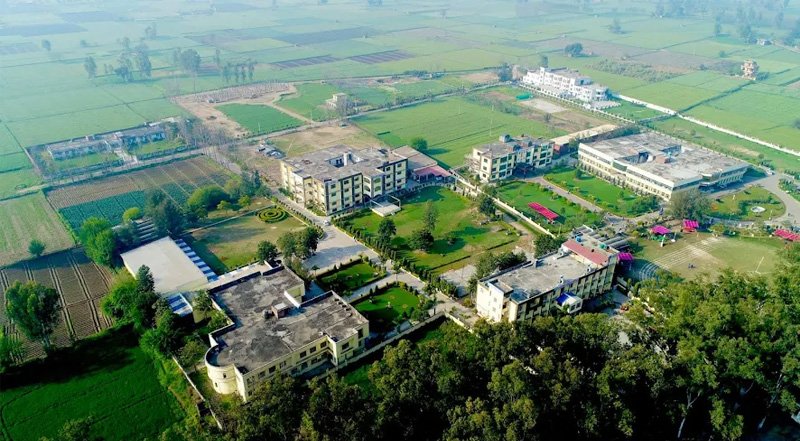
One of the most crucial decisions in a student’s life is selecting the appropriate post-school education. Students frequently feel uncertain about what to study next, what job path to choose, and which institution would help them create a bright future after finishing Class 10 or Class 12. With hundreds of professional, technical, and skill-based courses that prepare students for both further education and real-world careers, the educational environment has greatly increased.
Traditional degree paths are no longer the only choice in the cutthroat world of today. Because institute courses are practical, job-oriented, and centered on genuine skills, many students choose them. There is an institute course designed to meet your needs, regardless of your interests in technology, design, healthcare, finance, beauty, management, or creative industries.
This thorough guide will assist you in learning about the top post-school courses offered by the institution, how to select the finest one, and the employment options available in each stream.
Why Choose an Institute Course After Schooling?
Students are increasingly choosing institute-based courses for a number of reasons:
1. Job-Oriented Learning
The majority of institute courses are meant to give students useful information that will enable them to start a career as soon as they graduate. Instead of concentrating only on theoretical knowledge, these programs emphasize skill development.
2. Short Duration
Institute courses are perfect for individuals who wish to enter the workforce more quickly because they typically last between six months to two years.
3. Industry-Recognized Certifications
In order to provide recognized courses that are valuable in the job market, numerous institutions work with national and international organizations.
4. Affordable Education Pathways
Institute courses are more affordable than standard degree programs while still providing excellent employment options.
5. Flexibility and Multiple Career Choices
Depending on their interests, students can select from technical, vocational, creative, management, healthcare, or IT courses.
Top Institute Courses After Schooling for a Successful Future
Choosing the correct institute course after schooling might shape a student’s career trajectory. Students now have access to a variety of hands-on, career-focused training programs that help them develop solid skills for future development. Some of the most well-liked and fulfilling institute courses that students might choose after finishing their education are listed below.
1. Diploma and Certificate Courses in Information Technology
For students who are enthusiastic about technology, the IT industry, one of the fastest-growing in the world, offers a plethora of chances. Programs including the Diploma in Computer Applications (DCA), Web Design Certificate, Coding and Website Development, Cybersecurity Diploma, Hardware and Networking, Cloud Computing Fundamentals, and Mobile App Development are available to those that pursue this route.
These courses prepare students for a variety of career options in addition to teaching fundamental technical skills. Many recent grads find employment as network administrators, junior programmers, cybersecurity assistants, web developers, and IT support technicians. Every course gives students hands-on experience, preparing them for entry-level jobs in a variety of tech organizations and startups.
2. Paramedical Institute Courses
Paramedical studies are now a great choice for both science and non-science students due to the healthcare industry’s explosive growth. The Diploma in Medical Laboratory Technology (DMLT), Radiology Diploma, Emergency Medical Technician (EMT) training, Nursing Assistant Diploma, Ophthalmic Technician training, and Physiotherapy Technician courses are among the popular programs.
Students who complete these courses go on to have secure and fulfilling professions. Graduates can find employment as emergency unit assistants, radiologist assistants, laboratory technicians, patient care technicians, or hospital support staff. With long-term career security and advancement, the healthcare sector remains one of the most stable and growth-oriented.
3. Design & Creative Institute Courses
Pupils who are imaginative and creative can succeed in design-related fields. Courses in fashion design, interior design, graphic design, animation and visual effects, photography, textile design, and UI/UX design are offered by institutions that focus on creative training.
Numerous job avenues, including graphic design, fashion design, animation, interior design, and branding consulting, are made possible by these courses. Students at creative institutes are typically given real-world projects and practical assignments with an emphasis on portfolio building. Because of their experience, they can seek opportunities in the corporate and freelance sectors, where there is a constant need for creative people.
4. Management and Business Courses
A variety of short-term and long-term courses are available to students who are interested in leadership, business, and organizational management. The Diploma in Business Administration, Retail Management, Digital Marketing, Hospitality and Hotel Management, Supply Chain and Logistics, and Event Management are a few well-liked choices.
Students can pursue employment as sales executives, digital marketing specialists, hotel management trainees, event organizers, or operations executives after completing these courses. These skill-driven positions are constantly relevant and in great demand in the employment market, regardless of the size of the company.
5. Technical & Engineering Diploma Courses
Technical institutes provide practical diploma programs for individuals who wish to work in a technical field but do not want to pursue a standard engineering degree. The Diploma in Mechanical Engineering, Electrical Engineering, Civil Engineering, Automobile Engineering, and Electronics & Communication Engineering are among them.
These degrees prepare graduates for technical positions in the real world. After finishing these courses, one can pursue a career as a site supervisor, junior technician, mechanical assistant, electrical technician, or CAD designer. Due to the hands-on nature of the program, students gain knowledge through real-world projects and practical experience.
6. Beauty, Wellness & Cosmetology Courses
In recent years, beauty and cosmetology have become incredibly popular as a vocation and business opportunity. Programs like Beauty Therapy Diploma, Advanced Cosmetology, Hair Designing, Professional Makeup, and Spa and Wellness Therapy are offered by institutions in this category.
After completing these courses, students can work as skin experts, hair specialists, beauty consultants, makeup artists, or salon owners. For students who appreciate creative and client-focused work, this industry offers fulfilling career opportunities due to the increased interest in self-care, grooming, and professional beauty services.
7. Media and Communication Courses
Media-focused courses are beneficial for students who are interested in journalism, storytelling, content development, or digital communication. Journalism and mass communication, video editing, content writing, public relations, radio jockey training, and filmmaking are common choices.
These courses prepare students for careers as journalists, video editors, social media managers, screenwriters, and public relations executives. With a plethora of options across digital platforms, news agencies, film studios, and advertising organizations, the media and entertainment sector is still growing.
How to Choose the Right Institute Course After Schooling
Before choosing an institute course, students must take into account a number of important factors. Understanding one’s own interests is the first step. Selecting a field that aligns with a student’s interests guarantees long-term fulfillment, regardless of their enthusiasm for technology, design, business, healthcare, or media.
Acknowledging one’s own strengths is equally crucial. Strong analytical and problem-solving abilities can help students succeed in engineering or IT-related fields. Artistic people might do well in media or design classes. Healthcare or paramedical studies may be a good fit for students who appreciate helping others.
Investigating various institutions is crucial. The institute’s accreditation, instructor background, placement history, reviews, and hands-on training facilities should all be examined by students. Students should seek out programs that include real projects, internships, workshops, and practical training; it also helps to understand the course structure.
Opportunities for careers must also be assessed. Strong employment demand, long-term growth, and a variety of career pathways are all important components of an excellent course. Lastly, students should choose a program that fits their time and budgetary constraints by taking into account the length of the course and their budget.
Benefits of Choosing an Institute Course After Schooling
For students who prefer a skill-based and career-focused approach to education, institute courses have a number of benefits. These courses increase employability and foster the development of skills that are relevant to the workplace. Students get hands-on training that prepares them for the workforce by exposing them to real-world responsibilities and problems.
Opportunities for self-employment are also made possible by many institute courses. For example, graduates in cosmetology can open a salon, digital marketers can work as freelancers, and designers can work on their own. Additionally, these courses facilitate quicker career advancement and assist students in exploring contemporary careers that may not be covered by standard degree programs.
Future Scope of Institute Courses After Schooling
Because of the rapid digital change and the increase of skill-based recruiting, institute courses have enormous potential for the future. Employers increasingly place a higher value on abilities, practical knowledge, and practical experience than just degrees. Consequently, institution credentials are now extremely valued.
High pay potential and the freedom to change industries if they so choose are common benefits for students who finish these courses. Additionally, a lot of courses include remote work and freelance options, allowing individuals exposure to worldwide careers. Furthermore, because these programs are practical, students are certain to have real-world experience, which enhances their career path.
Conclusion
Your entire career can be shaped by the post-school course you choose. With hundreds of possibilities in the sectors of technology, healthcare, creativity, business, and technology, students can choose a career path that aligns with their interests and aspirations. A bright future is ensured by the practical, reasonably priced, and employable training provided by institute courses. Institute programs offer the ideal basis for long-term success, whether your goal is to start working early, become self-employed, or be ready for further education.